Score Definitions
A score definition describes one score your organization computes for each flow result: its name, the strategy used to calculate it, and the set of weighted tags that feed it.
In the Zyphe Dashboard, navigate to the Score Definitions page in the Compliance section to define custom scores for your organization and manage the tags that feed them.
Score definitions are managed by Admin users. See Manage Users for the full role reference.
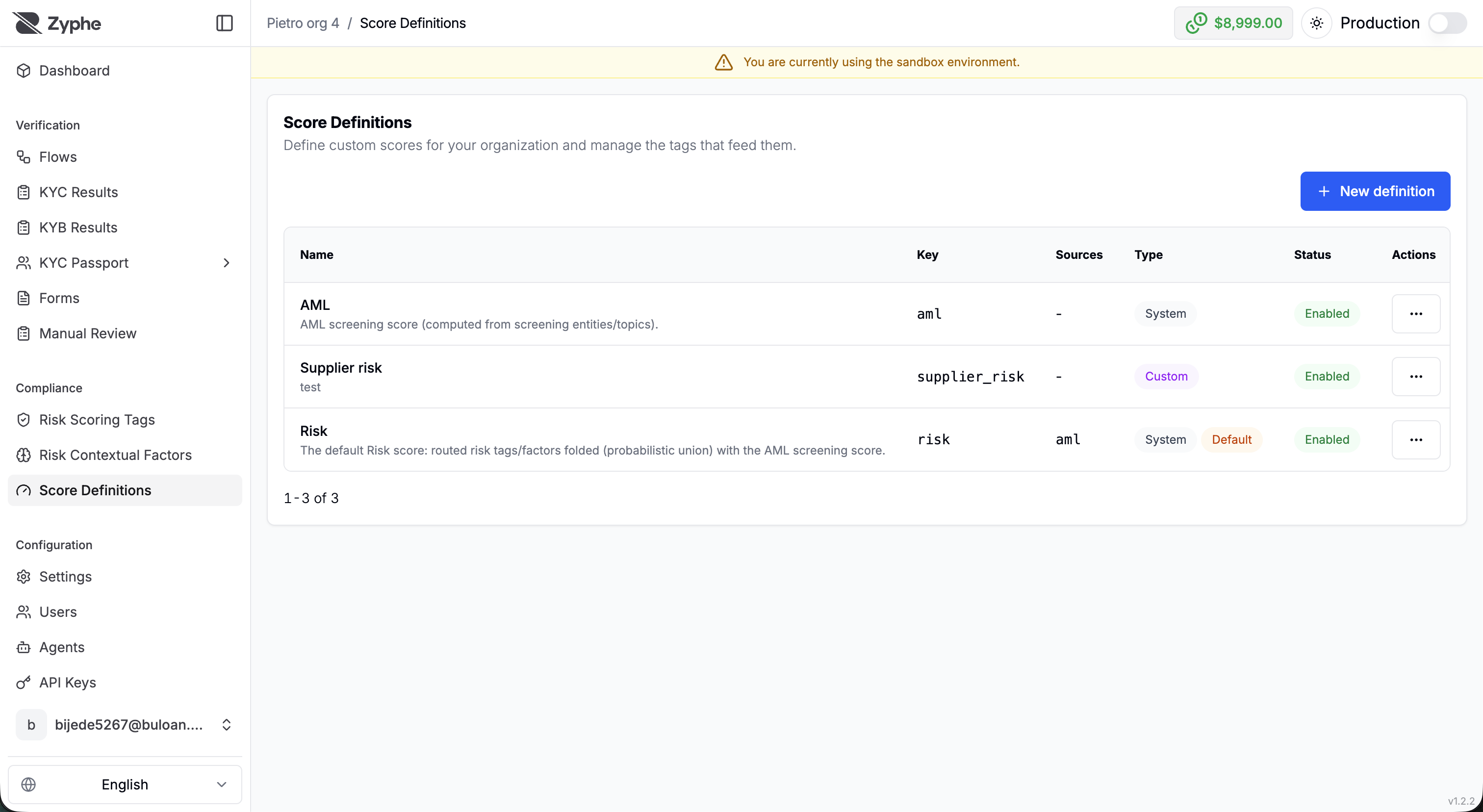
System scores
Every organization starts with system‑provided definitions — most notably the default Risk score, which is the headline score shown on flow results. System definitions cannot be edited or removed, and their keys (risk, aml) are reserved: you cannot create a custom definition with those keys. You can, however, manage the custom tags that feed them.
Create a custom score
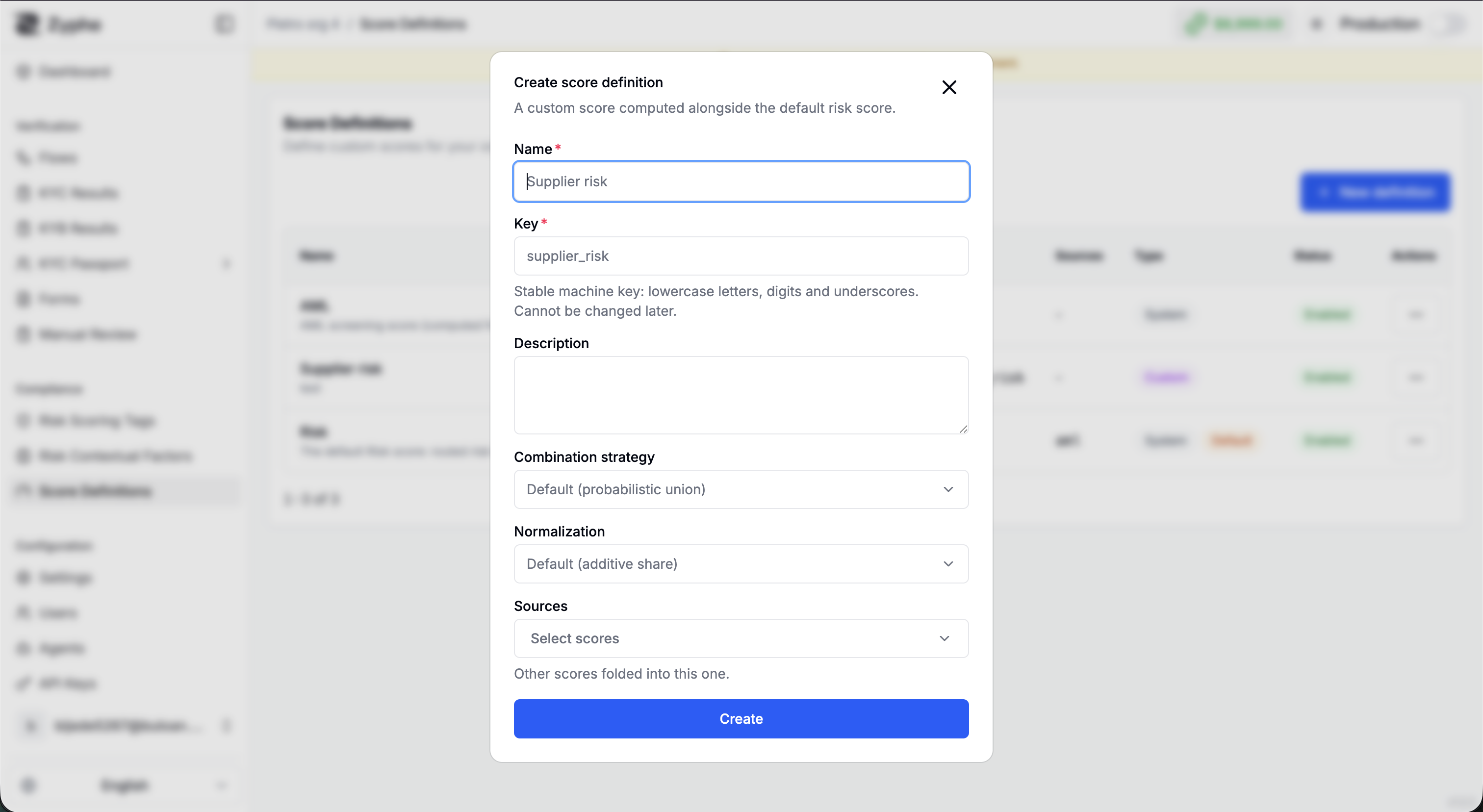
Click New definition and fill in:
- Name: The user-facing name of the score.
- Key: A unique, immutable identifier (lowercase letters, digits, and underscores — e.g.
supplier_risk). The key cannot be changed after creation. - Description: An optional description of what the score measures.
- Combination strategy: How the score's own tag-based result is combined with its sources — Probabilistic union (default), Maximum, or Weighted.
- Normalization: How matched tag weights are turned into a percentage — Additive share (scorecard) (default), Relative share, or Single tag ceiling.
- Sources: Other scores folded into this one. A score can build on the result of other scores; circular references are rejected.
The strategies are explained in detail in How Scores Are Computed.
Existing definitions can be renamed, re-described, re-configured, or disabled with the Enabled checkbox — a disabled score is skipped at computation time without deleting its configuration.
Manage tags
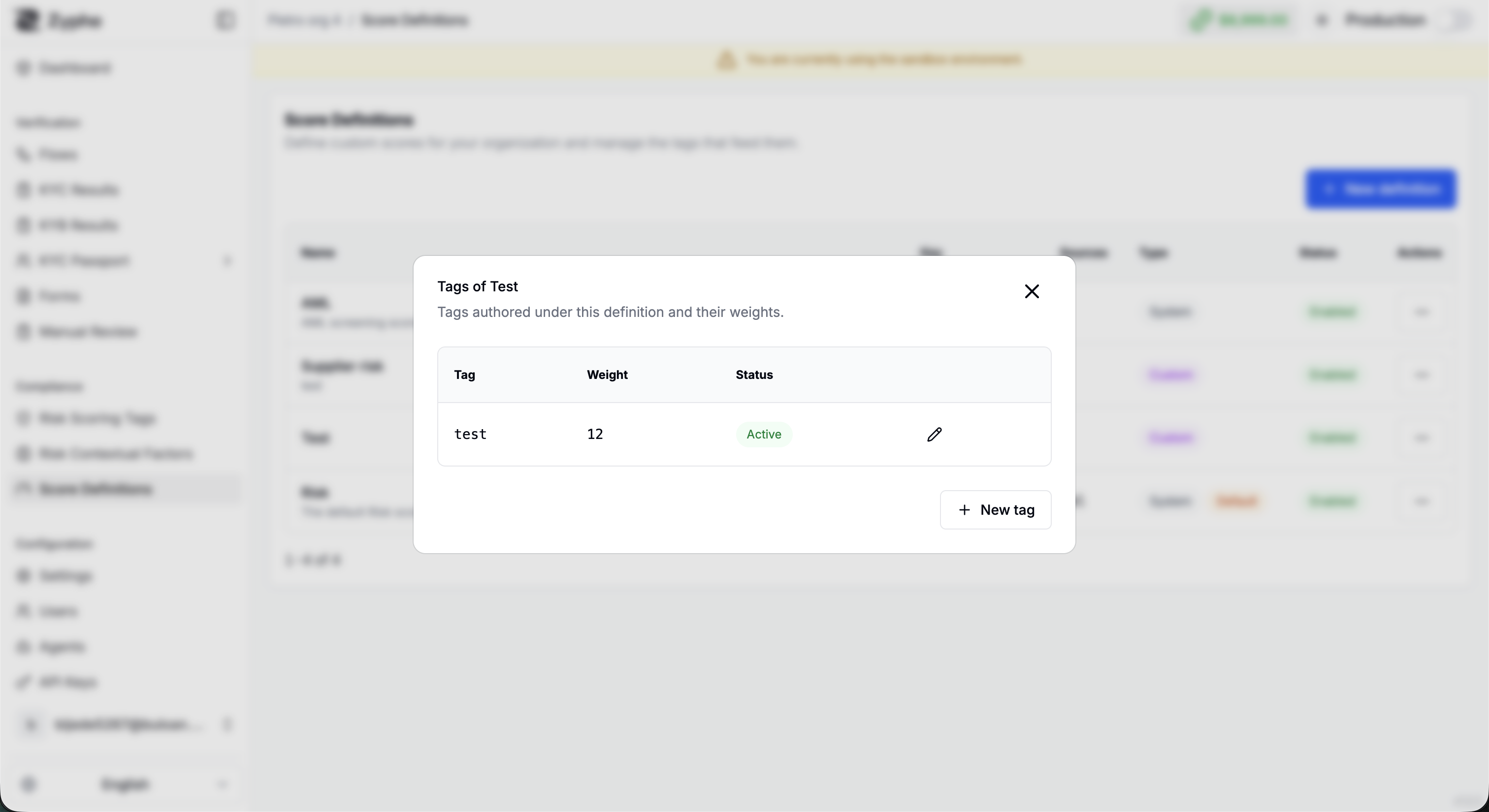
Each definition has a Manage tags action that opens the list of tags feeding that score, with their weight and status.
- Add a tag: Provide the Tag name and its Weight. The tag can then be assigned by forms and workflow actions.
- Edit a tag: Adjust the Weight or toggle the tag Active/inactive without deleting it.
The most common way to feed a custom score is directly from a form: assign weights to answers and options in the form builder, and they are recorded as score tags on the flow result. See Form scoring.